

The Mind’s Eye
Before we even get to the third eye, there is so much we don’t notice about the eyes through which we see everything. Our eyes say a lot. They’re connected to our emotions, our mind. Eyes are the doors to our mind.
Do you notice when you look upwards and to the left side, what is happening in the mind? This indicates a sense of wonder or doubt. When you have doubt, you look up and to the left, what is this person up to? Will this investment work or not?
When your eyes go to the right side and up that’s when you try to remember something – where did I keep my key? Where did I meet that person? If you are left-handed, then this could be reversed.
When your eyes are moving towards down toward the left, then the mind is thinking, “Don’t you know who I am?” And right side, when it moves down, it’s “Who do you think you are?”
Similarly, when the eyes are looking down at 30 degrees, that means you are introverted – your mind is going inward.
And then if both eyes are going up, then that is daydreaming. Wow, what if I get a crore of rupees? When you are happy, both eyes are open wide. And when you are scared, the eyes open even wider, right? When you don’t like something, you squeeze your eyes tight! It’s so interesting that with every movement of the eyes, something happens!
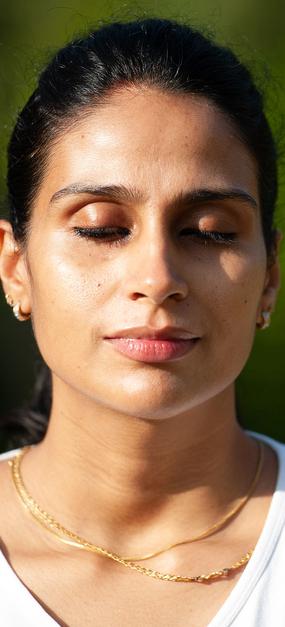
When you keep your eyes steady and relaxed, perhaps focused on an object or concept, not moving, then the mind also settles down. The awareness increases, and this can be used for energizing the third eye.
The Third Eye
Whenever you think, what do you do? Your hand automatically goes to your forehead. When you make a mistake, your hand goes to your head. When you think or deeply ponder over something then you keep your hand covering your forehead.
If you go to any country, you find that everywhere people have these gestures. The third eye is present here, between the eyebrows, at the centre of the forehead. This is the seat of wisdom. It is the peetha (seat) of knowledge.
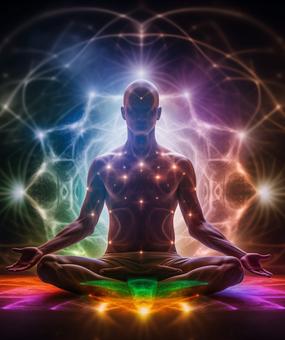
The ‘Third Eye’ is the sixth chakra (Ajna), and manifests as anger and alertness. Anger, alertness, knowledge, and wisdom are all related to the third eye centre.
The Story of Shiva and the Third Eye
There is a story in the mythology. Shiva, the embodiment of innocence and love, was meditating. His meditation was disturbed by an arrow of flowers from the lord of lust. As soon as Shiva woke up, he opened his third eye, and the lord of lust, Manmatha (one who churns the mind), was reduced to ashes.
This has a symbolic meaning. The third eye is associated with alertness and awareness. When you are alert, awake, more into knowledge, then naturally the energy has moved from the lowest chakra to the highest. The lower things are of no more interest to you.
When you are very alert and awake, the sexual energy has transformed itself into a different quality of consciousness. The sexual energy is when the back portion of our brain is activated. Alertness, perception, and awareness happen when the front portion of the brain is activated; the pituitary and pineal glands are getting activated.
In the brain also they are also on opposite sides of each other. So, it is mythologically said that when the third eye opens, then the gross desires simply evaporate, not that it is bad, but they simply don’t make much sense anymore.
That is why the intellectuals and the highly spiritually oriented practitioners put something on the forehead, some sandalwood paste, kumkum, or sindoor (vermillion), because they are focusing, doing some yoga and meditation. They put some sandalwood to cool the forehead a little.
When the frontal lobe of the brain becomes more active, more alert, then thinking, intellectual work, creativity, and memory are all enhanced because all of these things are in the frontal lobe of the brain. Sensory pleasures are all at the back of the brain.
Third Eye and Intuition
The third eye is also the gut feeling, it is the intuition. It is not some other eye sitting there. Everyone has experienced a gut feeling. Beyond all your reasons, your head says something, your logic says something, but your gut feeling says something else. You go by that, and it just works. This is the power of the third eye.
How to Open the Third Eye
Our mind is in a constant race. When we are running like that, we are unable to feel our sixth sense, our intuition. The intuitive ability in us gets covered and shrouded when we are too busy.
When you are content and when you are centered, then the sixth sense in you starts functioning. That’s why all innovations happen when a person calms down or starts to relax. When you are in a great hurry, you cannot do something creative. You can see these examples in history – Archimedes discovered the law of floatation while relaxing in his bathtub. Newton was sitting under a tree when he discovered the principle of gravity.
Dharana: From Focus to Flow
Before you can reach that relaxed state where your intuition comes up, your awareness comes up, you need Dharana. Dharana is focusing the mind on any one point. Hundreds of Dharanas are possible.
Even the idols are only Dharanas. You keep a Shivalinga; it is a Dharana. Your mind is focused on that. It is fixed on that.
You look at the sun, keep looking at the sun for a few minutes, the rising sun or setting sun, that is a Dharana. Similarly, with eyes closed, you do a Japa Mantra, which is a Dharana. And fixing your mind on any one of the chakras is a Dharana. You fix your mind between the eyebrows; this is all Dharana.
In that, when the mind is fixed in some place, it flows like oil—if you drop water, it comes in droplets, but when you pour oil, it comes as a string—continuous string. Dharana is the continuous pouring of the mind. And it leads you to Samadhi.
Tratak Dharana: Still Eyes, Silent Mind
Our mind is connected with the movement of the eyes. If your eyes are moving while someone is speaking, that means your mind is reading. It is not accepting even the knowledge that is being spoken.
Your eyes are going left, right. That means it is not accepting the knowledge. It is caught up in its own little cocoon.
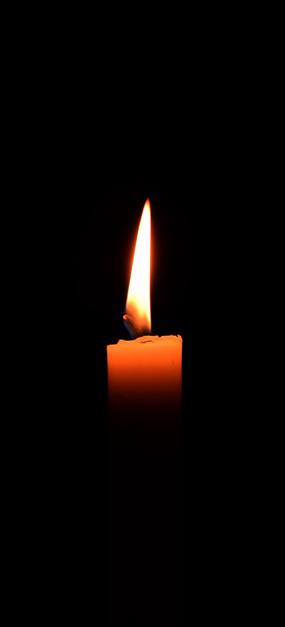
How do we not keep thinking? Simple. Just sit and put your attention on one thing. Don’t close your eyes. Keep your eyes open and focus on just one thing. Tratak is a Dharana also. You take a candle and focus on it. At that moment, there is nothing else on your mind. Just your gaze is fixed on it. In Hatha Yoga, we call it Tratak. You can sit outside. Keep a stone or anything in front of you. But typically it is a candle.
Do Tratak for 10–15 minutes. Since Tratak is just one point, look at that.
It could be a little strenuous, but then the tiredness will help you relax. It helps you to get into meditation or Dhyana. Meditation is the art of doing nothing. It’s the skill by which you make your mind become quiet and do nothing. Then you experience Samadhi.
Samadhi: Ocean of Bliss
Samadhi is what we all search for – what we really want. Samadhi is when you are aware, and you are there as though you are not there. It can be described as a boundless feeling. You are centered everywhere and circumference nowhere. Samadhi is that which sustains you. Sama means an equanimous sustainer of body and consciousness. That which upholds you, that which keeps the spring of life alive, that is samadhi.
The human nervous system is so designed that it can exhibit the totality of consciousness. Living in a finite body, and expressing infinity, is the possibility of human life!
And it is accessible by everyone. Practicing it is the only way of truly experiencing it. And if you can do few minutes of meditation daily, you will find that your concentration has improved and your intellectual abilities are boosted. Even a few days of continuous practice can change the quality of your life, making you happier and healthier.
Rudra: Third-eye Meditation by Gurudev
Meditations
Chakras Meditation with Gurudev